Table of Contents
THE TABOR TO PLATTE RAIL TO TRAIL
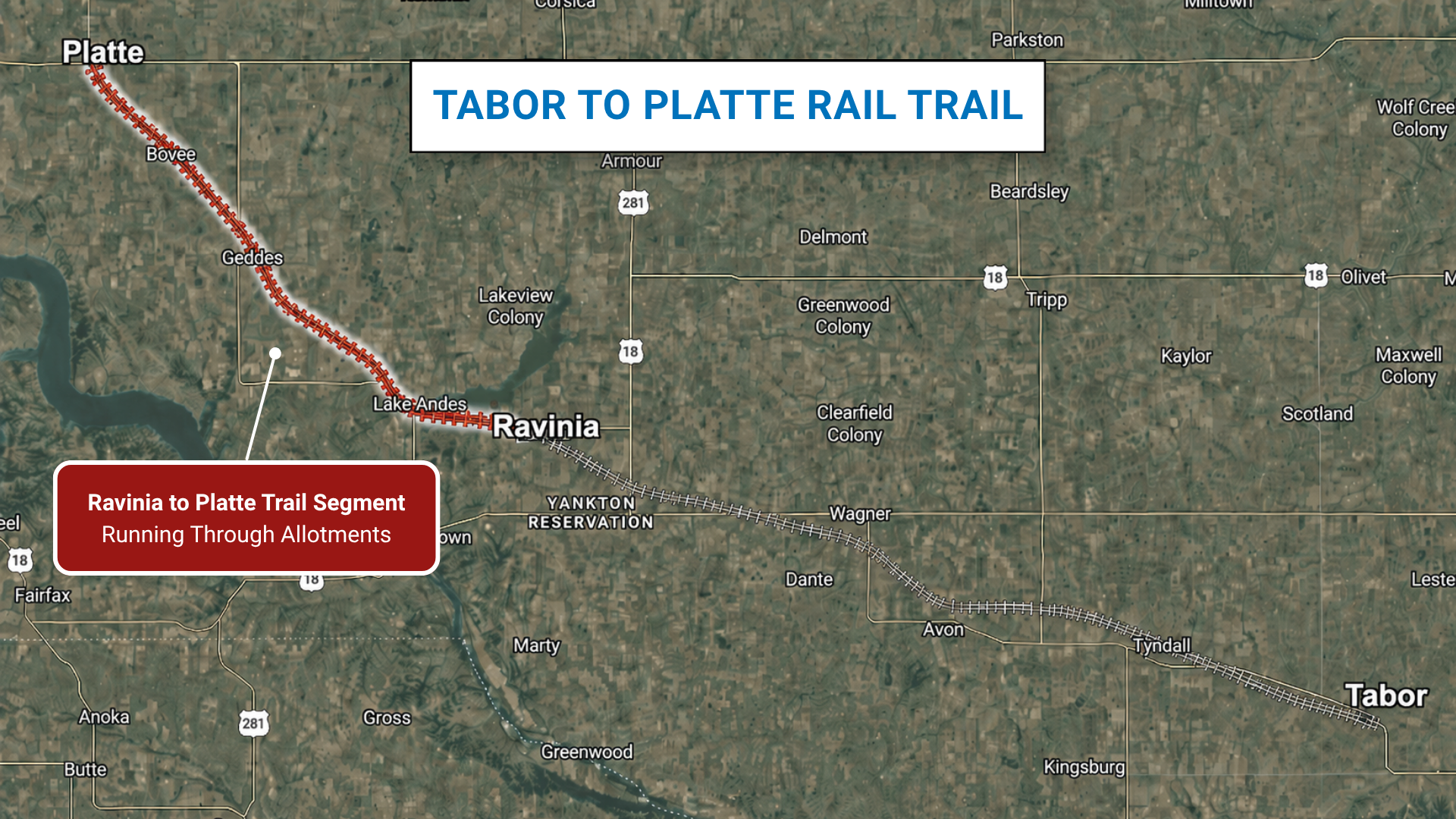
A rails to trails conversion turns an old, unused railroad line into a public trail for walking and biking. In Charles Mix County, South Dakota, an old railroad line is being turned into the Tabor to Platte Rail to Trail.
One part of that trail, the Ravinia to Platte section, follows the old Napa to Platte rail line along the east bank of the Missouri River. It crosses the Yankton Sioux Reservation and runs across a large number of allotments.
WHY THE FEDERAL GOVERNMENT MAY OWE ALLOTMENT OWNERS MONEY
When the government takes private property for public use, the U.S. Constitution says it has to pay the owner for it. That is called a “federal taking.” Using private land for a public trail can count, which is why the government may owe the allotment owners along this trail.
For generations, that strip of land has been part of several allotments passed down among their owners. Long ago, a railroad was allowed to run tracks across it, but the railroad never owned the land. It only had the right to use it.
Now the trains are gone. Instead of returning the land to the allotment owners, the federal government took it to build the Ravinia to Platte trail. Because the government took that land, it may owe the land owners money.
- A railroad crossed the allotment. The company only used the land. It never owned it.
- The trains stopped running on these tracks.
- The government took the land to build the Ravinia to Platte trail.
- So it may owe you money for taking that land and turning it into a public trail.
Even a small share of an allotment may be worth a payment.
HOW MCTLAW CAN HELP YOU FILE A CLAIM FOR YOUR ALLOTMENT
For years, our Indian law legal team has held the federal government accountable to the trust responsibilities it owes tribes and their members. This rails to trails claim is part of that work.
These cases sit where Indian law and federal law meet. Allotment land can have dozens or even hundreds of owners, and the records go back generations. Most law firms will not take these cases on because of the complexity and lack of experience in Indian Country.
What you can expect from us
We understand fractional allotment ownership, even when a single allotment has many owners. We will track down the deeds and old records, so you don’t have to. And we keep you updated, so you always know where your claim stands.
100% of any money you are compensated in these claims is yours.
You pay us no legal fees of any kind to represent you in a rails to trails case before the U.S. Court of Federal Claims. Our firm pursues its legal fees from the federal government AFTER your claim is complete, so the cost never comes out of your pocket.
QUESTIONS PEOPLE ASK
How will this impact my land or allotment?

Filing a rails to trails compensation claim has no impact on your allotment or land ownership. This claim is to demand compensation from the government and does not change your legal rights related to your property.
Will this stop the trail?
No. This is only about paying you for the land that was taken and used to create the public trail. It does not stop the development of the Tabor to Platte rail trail.
How much could I receive?
It depends on the value of your share of the land. We will tell you what we find.
How long does it take?
There’s no way to know until we begin our investigation. Sometimes these cases resolve quickly, but it may also take some time. We will keep you updated every step of the way.
Do I have to go to court?
No. Our attorneys handle everything for you.
What does it cost me?
Nothing. You pay no legal fees, and you keep the entire amount of any payment. Our firm pursues its fees from the federal government.
What if I did not receive a letter?
If you believe you own an allotment share on land along the Ravinia to Platte trail, contact us right away and our legal team will review your situation at no cost.
HOW TO GET STARTED
Reach out to our legal team to get started.
If you received a letter from us in the mail, you can send back a signed copy of the agreement so we can get started investigating your claim.
You can call, chat or fill out the form below for more information. There is no cost and no obligation.