
Table of Contents
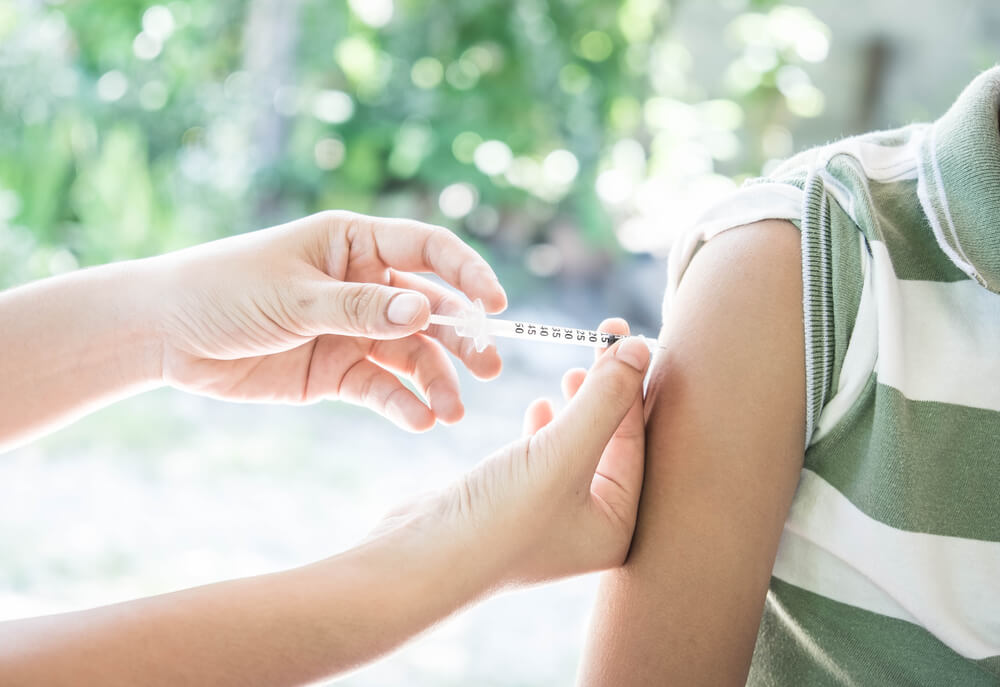
Millions of Americans get a flu shot every fall. For a very small number of people, that shot is followed by Guillain-Barré syndrome (GBS), a rare disorder that attacks the nerves. A study published in July 2026 in the journal Vaccine adds new evidence to that link. Of the 99 vaccines the researchers screened, flu vaccines produced the strongest GBS signal
What is Guillain-Barré Syndrome (GBS)?
Guillain-Barré syndrome occurs when the body’s immune system mistakenly attacks its own nerves. Symptoms typically begin with tingling or weakness in the feet and legs, then spread over days or weeks. The paralysis can be extreme enough to require hospitalization and help breathing. Most recover, though it can take months, but some people are left with lasting nerve damage or even paralysis. GBS often follows a viral or bacterial infection, but it has also been linked to vaccinations, most notably flu shots.
How researchers studied the link between flu vaccines and GBS
Investigators from the Harvard Pilgrim Health Care Institute and the Centers for Disease Control and Prevention (CDC) conducted the study using the Vaccine Safety Datalink (VSD). The VSD is a long-running CDC partnership with large health systems that tracks vaccine safety through patient records.
The team identified 2,584 adults diagnosed with GBS at 10 health systems between 2017 and 2023. For each patient, they reviewed each vaccine received in the 12 weeks before GBS diagnosis. The study covered more than 27 million flu shot doses.
The results of the study linking flu shots and GBS onset
Flu vaccines produced the strongest statistical signal for GBS of any vaccine in the study. During the 21 days after a flu shot, GBS diagnoses happened at nearly twice the expected rate. The signal also held up for six weeks after vaccination.
The researchers estimated about 1 extra GBS case occurred for every 1 million flu shot doses. That matches the risk found in earlier research on flu vaccines and GBS. For any one person, the risk is very small. But with over one hundred million flu shots administered in the United States each year, it still impacts many people.
GBS after high-dose and senior flu vaccines
Adults 65 and older typically receive stronger flu vaccines. These include high-dose vaccines such as Fluzone High-Dose and Fluad, which contain an added ingredient to boost the immune response. In the study, these vaccines also produced their own GBS signal, with diagnoses at about twice the expected rate in the first three weeks.
The estimated extra risk for these vaccines was about 2 cases per 1 million doses. The authors note that GBS becomes more common with age, so this number should not be compared directly with standard flu shots.
Study shows timing between GBS symptoms after a flu shot
Timing matters a great deal in flu shot GBS cases. The study found that the extra GBS cases piled up in the first three weeks after vaccination. By weeks four through six, the rate of GBS diagnoses had returned to about normal.
Those results fit within the time frame the federal vaccine injury compensation program uses for GBS after a flu shot, which is 3 to 42 days. In other words, this new study supports the program’s current approach to flu shot GBS cases.
Is GBS after a flu shot a covered vaccine injury?
Yes. Seasonal flu vaccines are covered by the Vaccine Injury Compensation Program (VICP), a federal program that compensates children and adults injured by covered vaccines. Claims go through the U.S. Court of Federal Claims rather than a traditional lawsuit against the vaccine maker.
GBS after a flu shot is on the program’s official list of injuries that it presumes are caused by a vaccine. When GBS symptoms begin 3 to 42 days after a flu shot, the Court assumes the vaccine caused it in the absence of contrary evidence. Therefore, the injured person does not have to prove that the vaccine caused the GBS. Medical records still need to confirm the GBS diagnosis, show when symptoms started, and not contain alternative causes. The government can still argue that something else, such as a recent infection, caused the illness.
What if GBS started outside that time frame?
GBS that began outside the 3-to-42-day window can still be compensated. In those cases, the injured person must prove the flu shot more likely than not caused the GBS. That takes a medical explanation of how the vaccine can cause GBS, a clear connection between the vaccine and the illness, and timing that makes sense. Research like this study can help support those claims.
To qualify for compensation, the injury generally must last more than six months or lead to an inpatient hospital stay with surgery. Compensation can cover medical costs, lost earnings, and pain and suffering. In the VICP, attorney fees and costs are paid separately by the court, not taken from the injured person’s award.
Talk with a vaccine injury lawyer about GBS after a flu shot
If your GBS developed after a flu shot, mctlaw can review the case, including cases where symptoms began outside the 3-to-42-day window. mctlaw represents people with GBS and other vaccine injuries in the VICP nationwide. Contact mctlaw at 888.952.5242 for a case evaluation.